

THE HERE AND NOW
Supporting Local, Chenin Blanc, Dumpling Salads, The Polaris Music Prize

I’ve recently returned from a few days spent in British Columbian wine country, a couple days each in the Similkameen and Okanagan Valleys. While most vineyards I rode past and toddled through were flourishing and vibrant, smoky skies resulting from wildfires to the east and south didn’t really allow for distraction-free enjoyment of Vintage 2026 in progress.
Sure, smoke taint and vineyard devastation are merely at the mercy of a change of wind direction, but the elephant in the room continues to be the hangover felt from the deep freeze of January 2024, and its resulting decimation of that local vintage.
We lost about 90% of our typical Okanagan/Similkameen production that year, and more than a good smattering of vineyards perished, requiring replanting and a firm game-face in the shadow of adversity by many a local producer.
At least the proverbial lights are still on. Rather than surrendering any semblance of a vintage that year, which would have thrown tourism and all related industries into a tailspin, a good dose of industry stickhandling and political support by our Provincial government resulted in an allowance for British Columbian producers to craft wine from grapes sourced beyond our borders.
I wrote about this last year, in Seattle’s Sip Magazine:
While some wineries opted to knock on the doors of our Canadian friends and family in Ontario, along with a few overseas pursuits, the vast number of wineries taking part in what has been dubbed the ‘replacement wine program,’ crossed the 49th parallel to explore opportunities in Washington, Oregon and California.
A few went to old stomping grounds where they spent a harvest or two in the past while coming of age in the biz. Others hit up connections made at industry outings like Pinot Camp or Riesling Rendezvous.
The common refrain was that not only were British Columbian winemakers welcomed and supported by our Pacific Coast neighbors, but that welcome was done so with humility, support, encouragement and respect, allowing us Canucks to make all the calls in the vineyards where our 2024 wines ended up being sourced. It was still a hands-on vintage for B.C. wineries, at the helm of all decisions from canopy management and pick times, to initial pressings and logistics on shipping.
Most wineries swapped in varieties they were used to working with; producers known for Chardonnay and Pinot Noir stayed in that Burgundy zone, as an example. Others stretched their wings. At the 20-year mark of homing in on Chardonnay, Riesling, Syrah and Bordeaux varieties at Orofino Vineyards, Similkameen Valley winemaker John Weber opted to play around with Washington State varieties he’d likely never have the chance to produce otherwise. For the first time ever, Orofino 2024 labels trumpeted varieties like Marsanne, Roussanne, Cinsault, and Chenin Blanc.
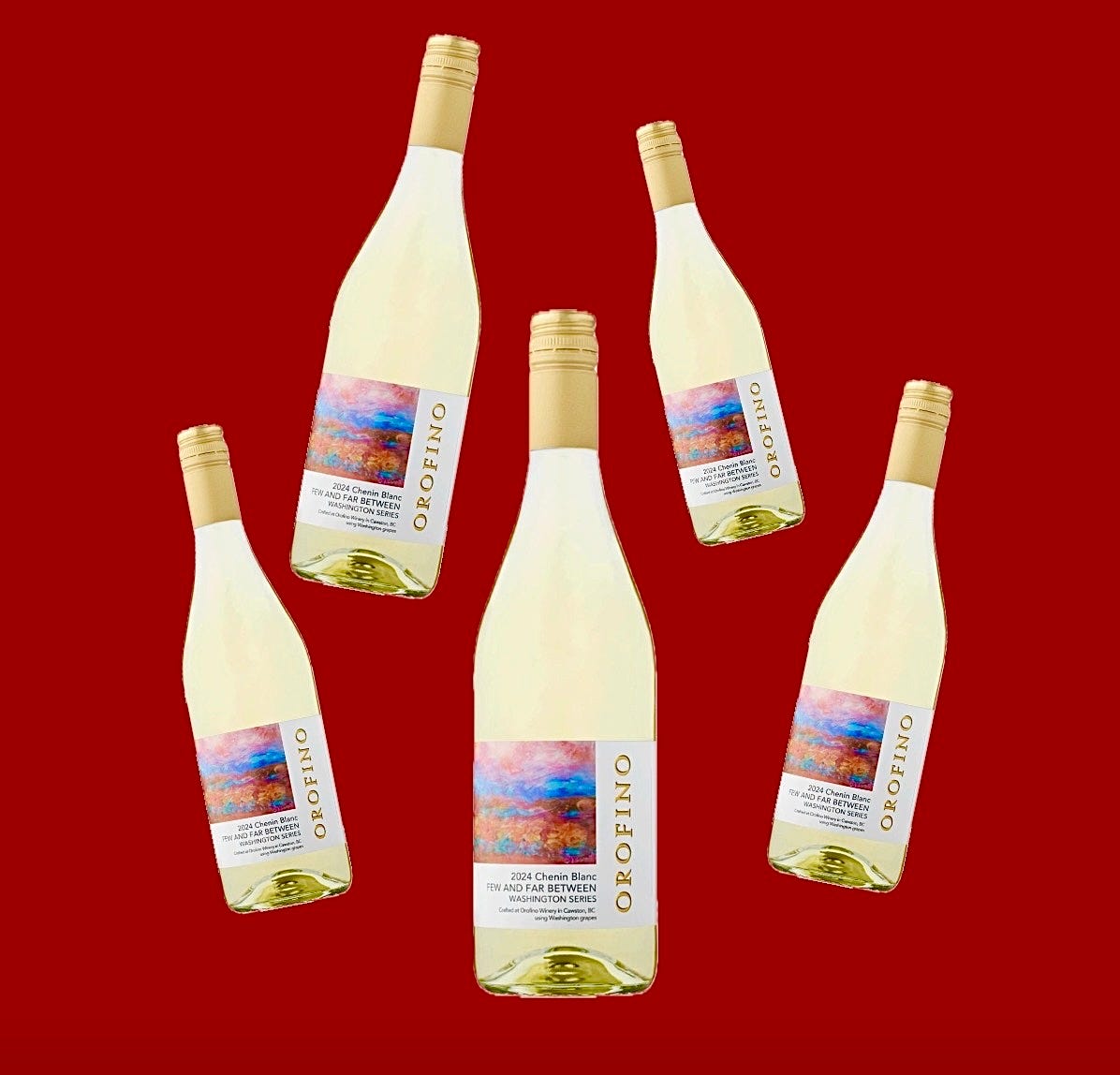
That Chenin, all woven with Gala apple, lemon curd, marzipan and nutmeg, prompted inspiration and action by Team Orofino; 2025 saw the first-ever Chenin planted at their home vineyard. Strap in; if my instincts are correct based on John’s initial fling with the variety, Orofino Chenin Blanc is going to be a significant local label for many years to come.
The replanting efforts in the across various vineyards by both growers and winery owners have been broad in their scope. Many who lost Syrah, a notably finicky variety prone to winter damage, opted to dive right back in - gambling odds be damned. Some, like Orofino, did a bit of a varietal re-jig to Vinifera grapes perhaps better suited to their land than what was planted before. And then others flipped the script, yanking what was left of their vinifera vines in certain blocks, putting heartier hybrids into the ground, which will see lower risk in the vineyard, but perhaps higher risk for their sales teams.
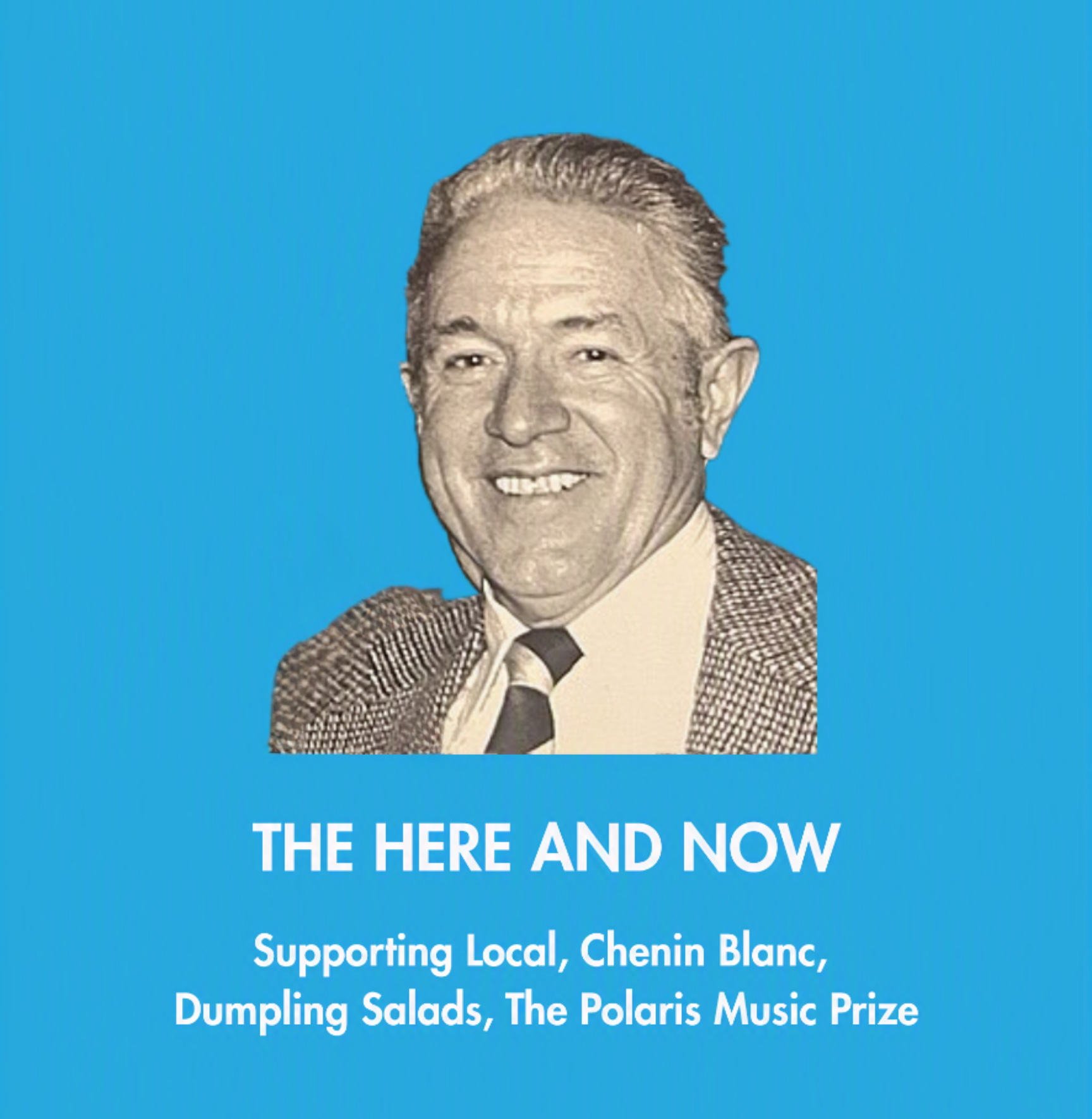
For those who did so, it was a bit of a full-circle moment when we look at the bigger picture. You see, for most of the 20th century, vineyard plantings across the province were mainly hybrids, the assumption being that’s all we’d have had success with when considering harsh winters and a short growing season. It wasn’t until the mid-1970s when Geisenheim University’s head of viticulture, Dr. Helmut Becker (that’s him in the title image of this post), swooped in from Germany and began work on what’s referred to as The Becker Project. A few years of his research and experimentation resulted in proof that 30+ vitis vinifera grape varieties could indeed be successfully grown in BC.
Wanna geek out? Here are Parts 1 and 2 of his report!

Eventually, to ensure we could have any semblance of a modern wine industry, financial incentives were offered by the government, encouraging growers to pull hybrids in favour of planting vinifera.
Foxy, gamey-natured hybrid grapevines were torn out; household names like Chardonnay, Pinot Gris, Pinot Noir, and Riesling became the norm. The industry grew in scope and quality, a few dozen wineries existing towards the end of the century have now become well over 300. The vast majority of local restaurants now proudly pour local bottlings, and while international sommeliers and publications like Decanter have taken note and sung our praises, our small, regional production volume has prevented any significant commercial success globally.
In fact, we’re still untangling decades of red tape, which have rendered interprovincial wine shipping illegal for generations, so even cross-Canada success has been a challenge. This national wine-shipping policy is dictated the provinces. Here in British Columbia, our doors have been wide open a while now for incoming and outgoing wine to and from the rest of the country. Over in, say, Ontario - it’s been a different story. British Columbians have long been permitted to have Ontario wines shipped directly, but the agreement hasn’t been reciprocal; any BC wine being directly shipped unauthorized to Ontario can land the shipper some heavy fines. A common assumption is the Ontario government/LCBO monopoly enjoy having this stranglehold on their market. Any wine being purchased by Ontarians, they want a piece of that provincial taxation pie. A considerable reason why BC wine availability or accessibility there is remarkably sparse.
An operating agreement between all premiers has just been signed that technically lifts the velvet rope at each provincial border, but how the dust settles is still anyone’s guess once final policies are drafted. The protectionism of the Ontario & Quebec governments and booze monopolies can’t be discounted.
I mean, we’re kinda used to that Ontario/Quebec provincial vibe from our vantage point, wayyy over here on the West Coast. I couldn’t help but notice when the final album shortlist for the Polaris Music Prize, the highest jury-voted music award (on artistic merit) in the land, was released a few weeks back - there was nary any artist hailing anywhere west of Manitoba (and there was only one from Manitoba). Any guesses which part of Canada most of the jury hails from? Lest anyone think this year’s an anomaly, the 2025 album short list was 100% composed of artists from Quebec and Ontario.
Hey, not to take away from any of the finalists. Listening through the Polaris Prize Finalist(Apple Music, Spotify) I was stoked that some previous and new faves are on there.
From my own province alone, I would have loved to see Mother Mother’s Nostalgia (Apple Music, Spotify) make the list, all three vocalists shepherding jangly, crunchy and fresh tunes without admirable consistency after all these years.
…or legendary Vancouver artist Rich Hope’s ‘loose, reckless and hopeful’ release, Live At The ANZA Club (Apple Music, Spotify): a kind of career-to-date victory lap, finally pressing his knack for incredible live performance into something accessible to all.
But, I digress. Back to wine.
2025 as a vintage in the Okanagan, Similkameen and beyond was BUMPIN’, with many vines rebounding into production sooner than expected, and a high volume of fruit harvested come autumn. Producers were able to exhale a little bit, extreme weather conditions and wildfires were minimal, and the hearty local appetite for supporting local continues.
It’s too early to tell where the chips will eventually fall for 2026; ideally the current wildfires will be among the last we see of them. Should that happen, it looks to be a solid vintage; we’re certainly happy to go two-for-two. We’ll cross our fingers.
In the meantime, let’s splash into some delicious current releases. I have a little clip ‘n save (screenshot ‘n save?) list of some faves that have come across the ol’ palate this year.
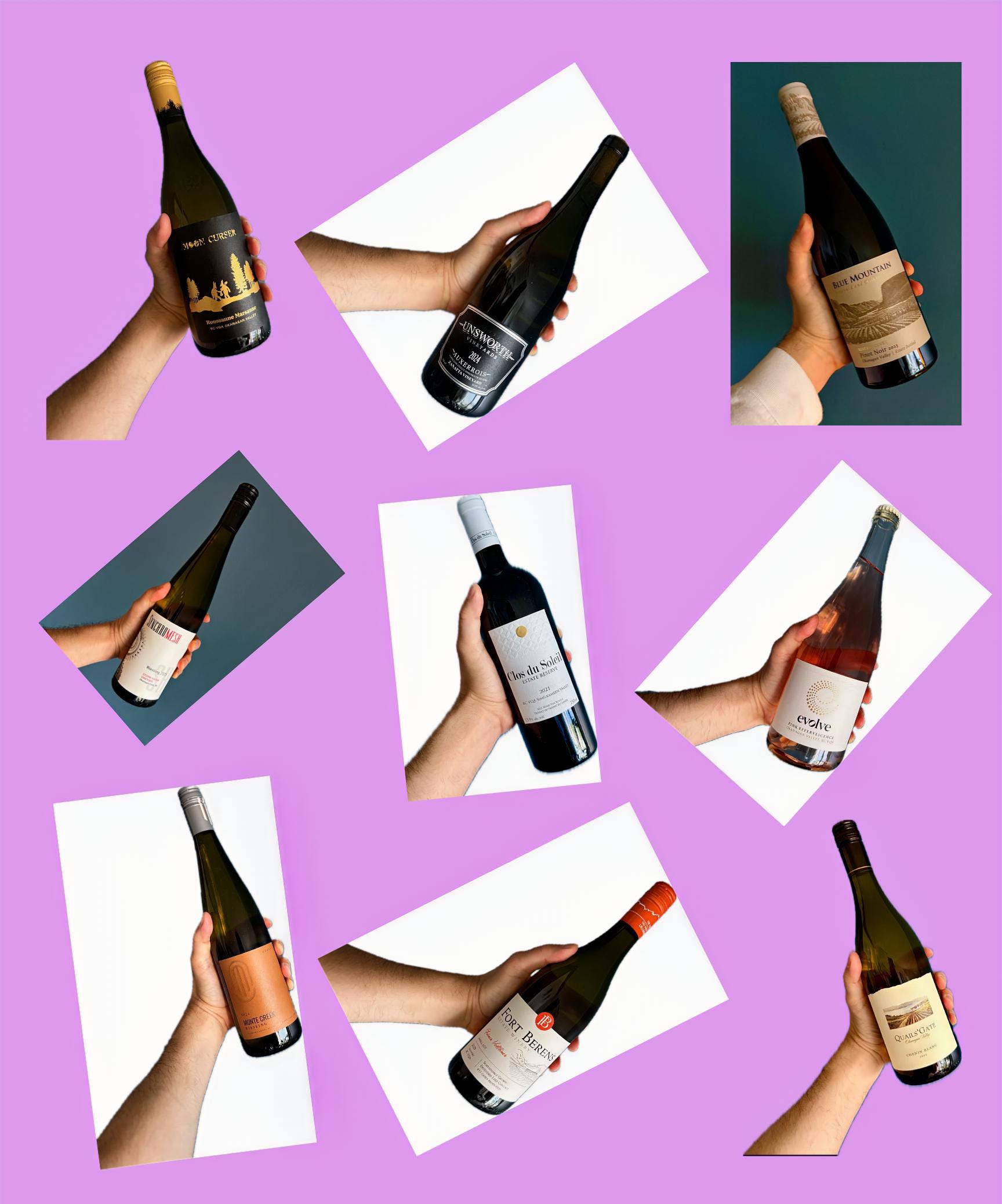
Moon Curser Roussanne Marsanne 2025 - I love how the tropical vibes here keep things light and buoyant - far from the heavier, exhausting weight some white Rhone blends are known to carry.
Unsworth Vineyards Auxerrois 2024 - Vancouver Island’s penchant for lending a breezy, sea-spray-kissed nature to aromatic whites hits all this pear and honey business well.
Blue Mountain Reserve Cuvée Pinot Noir 2023 - Blue Mountain have been producing some of Canada’s finest Pinot Noir since Douglas Coupland’s Generation X dominated the zeitgeist, The Silence of the Lambs won the Academy Award for Best Picture, and C + C Music Factory made us sweat. AND THEY’RE STILL AMONG THE BEST! (Also, you can buy a magnum of the stuff for under 90 bucks? What?!?)
Synchromesh ‘Storm Haven’ White Label Riesling 2025 - This juicy, stone fruit-laden gem comes in at less than 8.5% alcohol. The lofty acid carries that charming honeyed finish so damn well; drink this by the pint.
Clos du Soleil Estate Reserve Red 2021 - Some local wineries are charging twice as much for half the wine. Sure - a premium price tag, but it comes back to you in spades. This card-carrying Similkameen Valley take on a Bordeaux-inspired blend deftly incorporates each variety into its rightful place.
Evolve Pink Effervescence - I could get into what the Pinot Blanc, Ortega, Chardonnay, Pinot Noir, and Syrah(!) each contribute to this cheery wine, or how the méthode cuvée close affects its texture, but - frankly - I’d rather just grab some salty snacks and guzzle the stuff with abandon.
Monte Creek ‘Living Land’ Riesling - A citrusy, zesty drop that’s quite dry on the finish. Anyone looking to explore the potential of local hybrid grape varieties should pluck a label or two from Monte Creek’s dynamic roster of wines, if you like this Riesling, there’s no reason their La Crescent won’t float your boat.
Fort Berens Small Lot Grüner Veltliner 2025 - Because, in hindsight, why wouldn’t a Grüner grown in the sunny mountains of Lillooet be expressive and tasty? Lime. Nougat. Yum.
Quails Gate Chenin Blanc 2025 - Why don’t we grow more Chenin in BC? I’m glad producers like Orofino are jumping on the bandwagon, because the few-and-far-between takes on the variety always, always shine. Quails Gate? Well, that’s Exhibit A.
O.K., we have more than enough to drink now, yeah?
Now, what are going to eat?
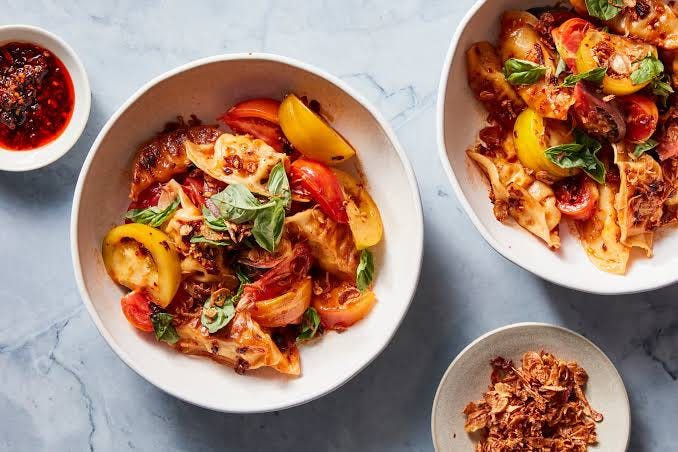
Ever since stumbling across Hetty Lui McKinnon’s Dumpling Tomato Salad With Chile Crisp Vinaigrette recipe in the New York Times a couple years back, it has been THE MOVE for me, come heirloom season each summer since.
I’m STOKED, because she’s levelled up the category, expanding on the concept on her (awesome, awesome) Substack platform, To Vegetables, With Love.

If you haven’t, you must. These dishes are hearty enough to be red wine-friendly, yet lively and colourful enough to hit aromatic and rich white wines well. Even better, the recipes come together fast! Hit the farmer’s market, and bolster these with the best of the season.
So, fire up some tunes. Pull a cork or twist a cap. Then, get in the kitchen and start assembling something delicious! The here and now has so much to offer.